
10. 3D Graphene Foams
The 3D Graphene Foam is made via chemical vapor deposition (CVD) processing. In course of CVD fabrication of graphene hydrogen and methane gases are introduced into a furnace that heats to 1000° Celsius. In the furnace is a nickel or copper film which captures a mono or multi-layer or graphene as the furnace is heated and the methane decomposes. To create CVD Graphene Foam, instead of using a thin sheet of nickel to capture graphene, nickel or copper foam is used. The metal foam captures graphene in a similar foam structure. The metal skeleton is then etched away and left is a visible, porous 3D graphene foam structure. This structure has a high surface area, which opens several exciting applications for Graphene Foam while maintaining most of two-dimensional graphene’s properties1. CVD processing of Graphene Foam opens a cost-effective route for engineering a new class of ultra-light, highly conductive graphene-based materials with exceptional mechanical strength, flexibility, and elasticity.

The electrical and structural properties of CVD grown Graphene Foam are superior when compared to the properties of its rivals, chemically derived reduced graphene oxide and few-layered graphene nanoplatelets. Both rivals suffer from a high concentration of defects as well as poor interflake mechanical contact. This is because, unlike CVD Graphene Foam, they require many separate sheets of graphene to connect with one another whereas CVD processing creates the entire Graphene Foam at the same time.

Free Standing Graphene Foams
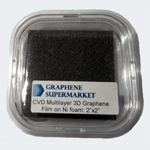
Graphene on Nickel Foams
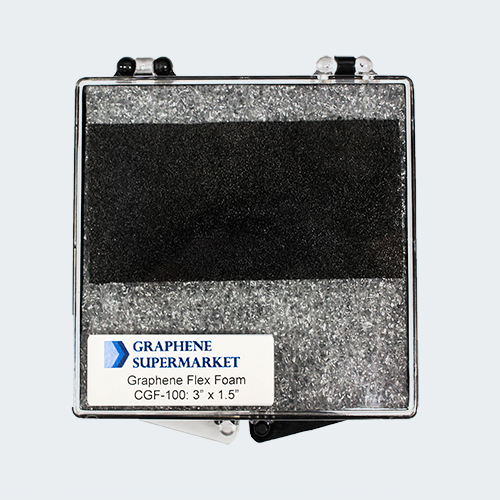
Flexible Graphene Foams
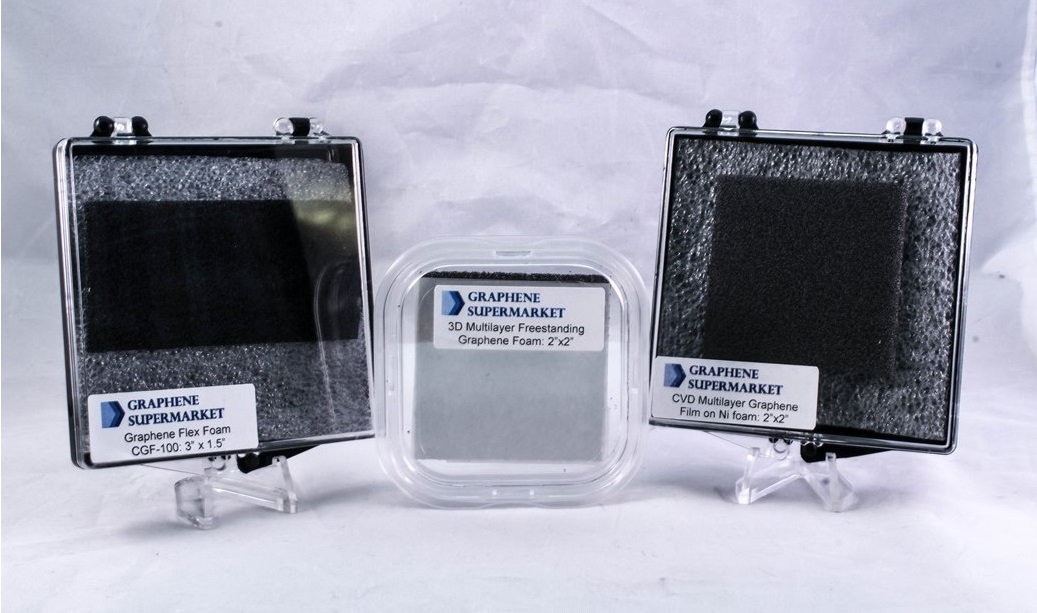
Graphene Foam Combo Pack